

World Patient Safety Day: Keeping People Safe When Receiving Care at Home
Safe care at home is about more than completing care tasks. Good communication, appropriate medication support, infection prevention, falls awareness and recognising changes in wellbeing can all contribute to safer, more responsive care.
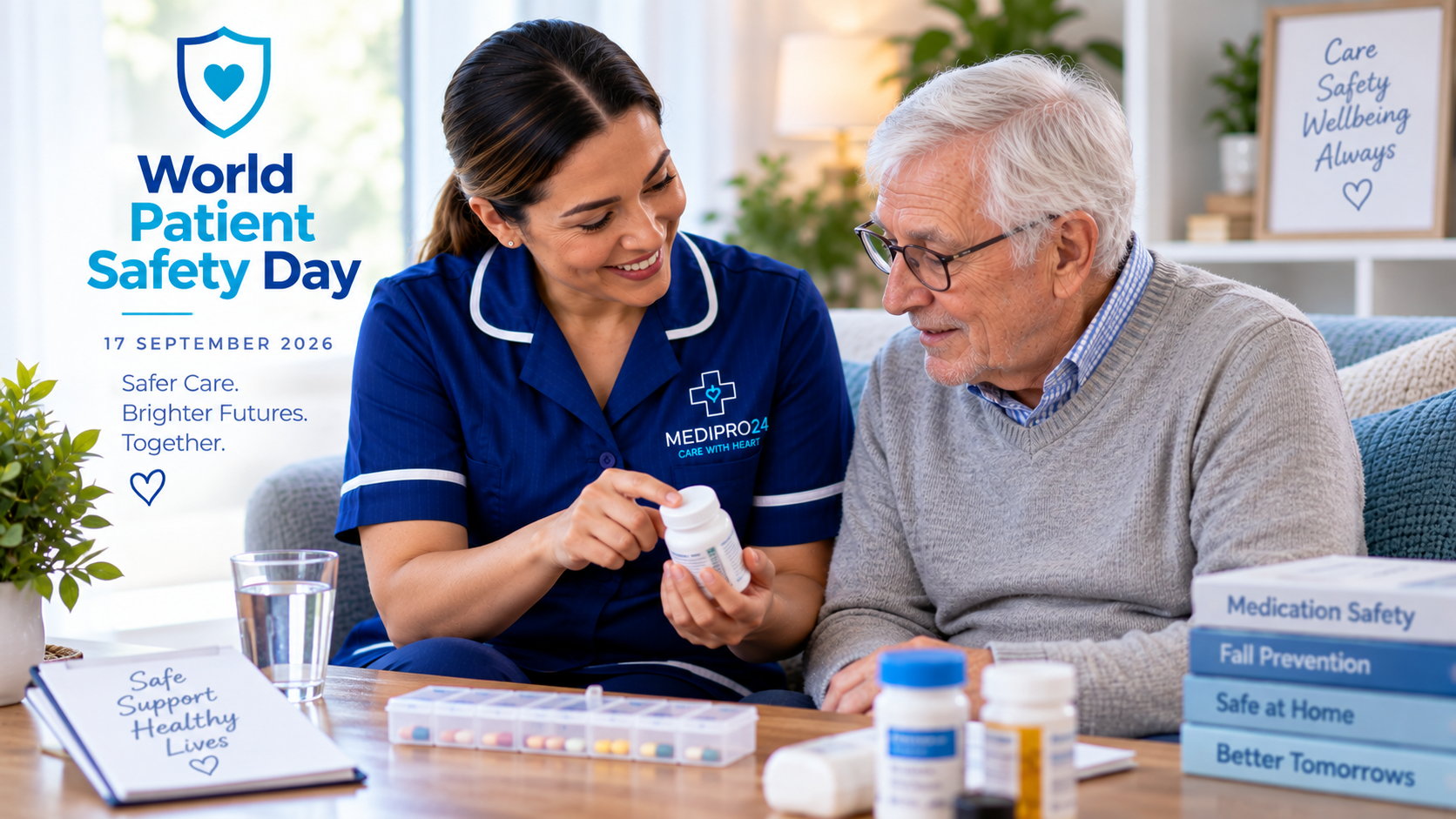
Every year on 17 September, World Patient Safety Day provides an opportunity to focus attention on preventing avoidable harm and improving safety within health and care.
Patient safety is just as important when care is provided in someone's home as it is within a hospital or other healthcare setting.
People receiving domiciliary care may require support with medication, mobility, nutrition, personal care and other aspects of everyday life. Some people may also live with several health conditions or have needs that change over time.
This makes good communication, careful care planning, appropriate risk management and well-trained care staff particularly important.
Safe care should protect people from avoidable harm while continuing to respect their dignity, independence, choices and right to live their life.
What Does Patient Safety Mean in Home Care?
Patient safety is about reducing the risk of avoidable harm while someone receives health or care support.
Within domiciliary care, this can involve many different areas of someone's everyday life.
Medication Safety
Making sure medication support is provided in line with the person's care plan and appropriate medication procedures.
Falls Awareness
Identifying potential risks and supporting mobility without unnecessarily restricting a person's independence.
Infection Prevention
Good hand hygiene and appropriate infection prevention practices can help reduce the spread of infection.
Recognising Change
Changes in behaviour, appetite, mobility or general wellbeing may indicate that someone's needs should be reviewed.
Safe Care Planning
Clear care plans and risk assessments help staff understand how an individual should be supported.
Communication
Accurate communication between the individual, families, carers and relevant professionals can reduce misunderstandings and help concerns be addressed promptly.
1. Medication Safety at Home
Many people receiving home care also take medication. Depending on the person's assessed needs, a care worker may provide an appropriate level of medication support.
Medication errors can potentially have serious consequences, which is why clear procedures and accurate records are important.
Safe medication support can include:
- Following the individual's current care plan.
- Following the medication administration record where applicable.
- Checking the correct person and medication.
- Following the prescribed dose, route and timing instructions.
- Recording medication support accurately.
- Reporting missed or refused medication appropriately.
- Following procedures for PRN or "when required" medicines.
- Reporting medication errors or concerns promptly.
Never Guess With Medication
If there is uncertainty about a medicine, dose, instruction or medication record, care staff should follow their organisation's procedures and seek appropriate guidance rather than making assumptions.
2. Reducing the Risk of Falls
Falls can have a significant impact on someone's confidence, mobility and independence.
A number of factors can potentially increase someone's risk of falling, including changes in mobility, poor lighting, unsuitable footwear, obstacles within the home or certain health conditions.
Home care staff can play an important role by observing the environment and reporting concerns.
Practical considerations can include:
- Keeping commonly used walking routes clear.
- Making sure mobility aids are accessible where required.
- Encouraging appropriate footwear.
- Reporting noticeable changes in mobility.
- Following moving and handling guidance within the care plan.
- Reporting falls, near misses and environmental concerns.
Falls prevention should support safer independence — not unnecessarily prevent someone from living their life.
3. Infection Prevention and Good Hygiene
Care workers may provide support to several different people during their working day, making infection prevention an important part of safe care.
Good hand hygiene is one of the most important measures used to help reduce the transmission of infection.
Depending on the care being provided, appropriate infection prevention measures may also include:
- Effective hand washing and hand hygiene.
- Using appropriate personal protective equipment where required.
- Safe disposal of waste.
- Appropriate handling of laundry.
- Maintaining clean care equipment.
- Following food hygiene practices when preparing meals.
- Following organisational infection prevention procedures.
4. Recognising Changes in Someone's Wellbeing
Care workers often see people regularly and may therefore notice changes in someone's usual presentation or routine.
These observations can be important.
For example, a care worker might notice changes in:
- Appetite or fluid intake.
- Mobility.
- Alertness or behaviour.
- Communication.
- Skin condition.
- Continence.
- Pain or discomfort.
- Mood.
- Ability to manage usual activities.
A change does not necessarily mean there is a medical emergency, but relevant concerns should be recorded and escalated according to the person's care plan and the provider's procedures.
Knowing what is normal for the individual can make it easier to recognise when something has changed.
5. Good Communication Helps Keep People Safe
Communication problems can create risk in any care environment.
Information about someone's needs may need to be shared between care workers, the individual, family members and relevant health or care professionals.
Care records should therefore be clear, factual and completed appropriately.
Important changes or concerns should not simply be left for the next care worker to discover.
Observe
Pay attention to the person's wellbeing, environment and any changes from their normal presentation.
Record
Make clear and accurate records in accordance with the person's care arrangements and the provider's procedures.
Report
Escalate concerns promptly to the appropriate person rather than assuming someone else will deal with them.
Review
Where needs or risks have changed, care plans and risk assessments may need to be reviewed.
6. The Importance of Care Plans and Risk Assessments
Safe care begins with understanding the individual.
A care plan should provide care workers with clear information about the person's needs, preferences and the support they require.
Risk assessments can help identify potential hazards and set out measures to manage those risks appropriately.
Depending on the individual, this might include risks relating to:
- Falls and mobility.
- Moving and handling.
- Medication.
- Nutrition and hydration.
- Skin integrity.
- The home environment.
- Infection.
- Specific health conditions.
Care plans and risk assessments should reflect the person's current needs rather than remaining unchanged when circumstances have clearly developed.
7. Nutrition and Hydration
Food and fluids are another important aspect of wellbeing and safe care at home.
Some people may require support preparing meals or drinks, while others may have specific dietary requirements identified within their care plan.
Where care staff have concerns about someone's eating or drinking, those concerns should be recorded and reported appropriately.
Changes such as repeatedly refusing meals, drinking significantly less than usual or difficulty eating or swallowing may require further attention depending on the individual's circumstances.
8. Safeguarding People From Abuse and Neglect
Everyone receiving care has the right to be treated safely, respectfully and with dignity.
Care workers should understand how to recognise and report potential safeguarding concerns.
Concerns may relate to different forms of abuse or neglect, including physical, emotional, financial or organisational abuse.
Where a care worker sees, hears or is told something that raises a safeguarding concern, they should follow the appropriate safeguarding procedures rather than attempting to investigate the matter themselves.
Speak Up About Safety Concerns
A strong safety culture encourages people receiving care, families and care workers to raise concerns. Concerns should be taken seriously and addressed appropriately.
Safety Should Still Be Person-Centred
Keeping someone safe does not mean removing every possible risk from their life.
People receiving care continue to have preferences, goals and the right to make choices about their everyday lives.
Risk management should therefore be proportionate and take account of both safety and quality of life.
For example, someone may want to continue preparing part of their own meal, walking in their garden or participating in activities that involve some degree of risk.
Where appropriate, the aim should be to identify how the person can be supported to participate as safely as reasonably possible rather than automatically preventing the activity.
Good care considers both sides of safety: protecting people from avoidable harm while protecting their independence and quality of life.
How Families Can Contribute to Safer Care
Family members often know the person extremely well and may notice changes that are not immediately obvious to someone else.
Families can contribute by sharing relevant information about changes in the person's health, medication, mobility, routines or behaviour with the care provider.
They should also feel able to ask questions or raise concerns about the care being provided.
Good communication between the individual, family and care provider can help create a clearer understanding of changing needs.
Knowing When Urgent Help Is Needed
Home care is not a replacement for emergency medical treatment.
If someone is seriously unwell or there is an immediate threat to life, appropriate emergency assistance should be sought.
In the UK, call 999 for a life-threatening emergency. For urgent medical help that is not a life-threatening emergency, NHS 111 can provide guidance on what to do next.
Safe, Person-Centred Care at Medipro24
At Medipro24, safety is an important part of providing high-quality, person-centred care.
Our approach begins with understanding the individual's needs, routines, preferences and potential risks so that appropriate support can be planned around them.
Care also needs to remain responsive. When someone's needs or circumstances change, those changes should be communicated, recorded and considered as part of ongoing care planning.
Safe care is not a single action. It comes from good planning, communication, observation, training and a willingness to act when something does not look right.
World Patient Safety Day 2026
World Patient Safety Day is marked on 17 September and provides an opportunity for health and care organisations, professionals, people receiving care and families to reflect on how avoidable harm can be reduced.
For home care providers, it is also a useful reminder that safety must remain part of everyday practice — from medication and infection prevention to communication, safeguarding and recognising changes in someone's wellbeing.
Most importantly, safer care should continue to recognise the individual as a person with their own voice, preferences, relationships and life.
Looking for Safe, Personalised Care at Home?
If you are considering home care for yourself or someone you love, the Medipro24 team can discuss your circumstances, care needs and the type of support that may be appropriate.
Our aim is to provide care that supports safety while respecting the individual's dignity, independence, choices and everyday routines.